Blessed Gonzalo of Amarante, faithful servant of God, you devoted your life to prayer, pilgrimage, charity, and the service of others. Teach us to seek God with a sincere heart and to remain faithful in times of difficulty. Help us to follow your example of humility, simplicity, and love for the poor. Blessed Gonzalo, who embraced a life of prayer and solitude, pray that we may grow deeper in faith and trust in God's providence. Intercede for families, for those who are struggling, and for all who seek God's blessing in their lives. May your example lead us closer to Christ and inspire us to serve others with love and generosity.
BLESSED. GONZALZ

BLESSED. GONZALZ

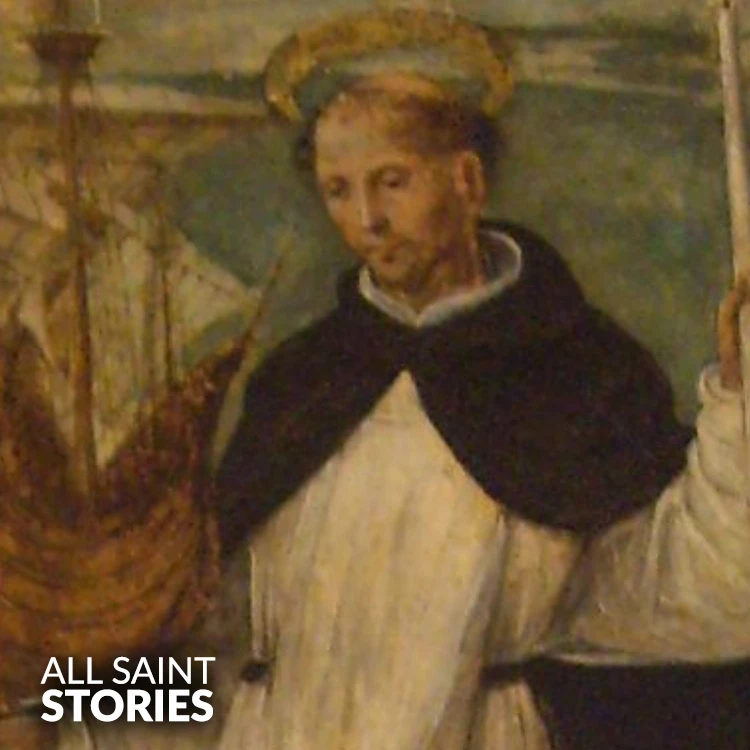
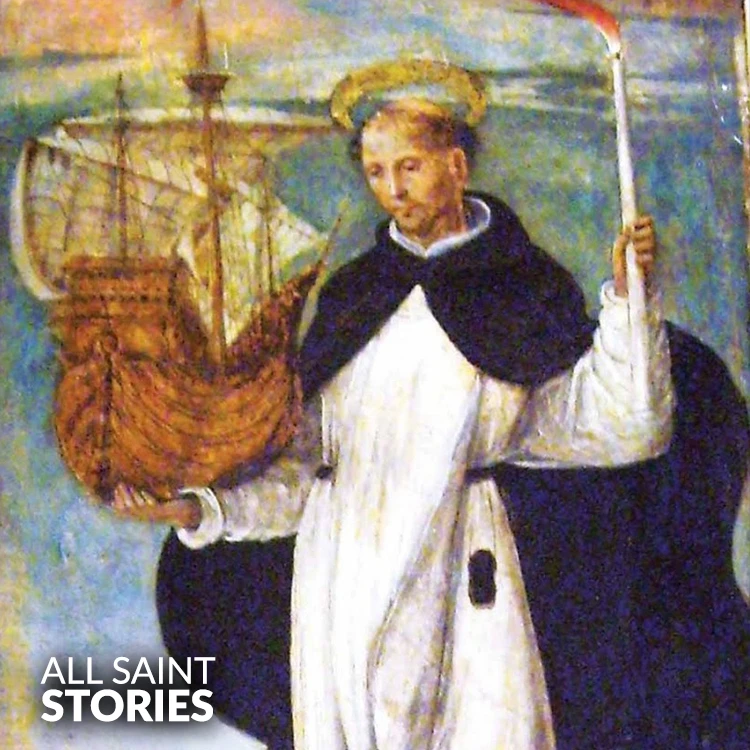
Blessed Gonzalo of Amarante was a 13th-century Portuguese priest, Dominican religious, pilgrim, hermit and evangelizer. Born around 1187 in the region of Vizela, he devoted himself to God from his youth and was ordained a priest by the Archbishop of Braga. After serving as a parish priest, he undertook a long pilgrimage to Rome and Jerusalem. Upon returning to Portugal, he eventually embraced Dominican religious life and a more solitary existence as a hermit in Amarante. He became associated with prayer, charity, evangelization and miraculous events. He died on January 10, 1259, and Pope Pius IV approved his beatification in 1561. His liturgical feast is celebrated on January 10.
Blessed Gonzalo of Amarante was a 13th-century Portuguese priest, Dominican religious, pilgrim, and hermit whose life became an example of prayer, humility, charity, and dedication to God. He was born around the year 1187 in the region of Tagilde, near Vizela, Portugal. From his early years, Gonzalo showed a strong desire to serve God and live a life devoted to Christian faith.
After receiving his religious and theological formation, Gonzalo was ordained a priest. He served the Church faithfully and developed a reputation for compassion toward the poor and those who were suffering. Rather than seeking comfort or worldly recognition, he desired to deepen his relationship with God through prayer and sacrifice.
According to traditional accounts of his life, Gonzalo undertook pilgrimages to important Christian holy places, including Rome and Jerusalem. These journeys strengthened his faith and gave him a deeper understanding of Christian devotion. After returning to Portugal, he continued his priestly ministry and eventually embraced a more contemplative way of life.
Gonzalo later became associated with the newly established Order of Preachers, commonly known as the Dominicans. He lived for a period as a religious and eventually chose a life of solitude and prayer near the area of Amarante. His life as a hermit did not mean that he abandoned people. Instead, people came to him for spiritual guidance, prayer, and encouragement. He continued to proclaim the Christian faith and assist those who were poor or in need.
Tradition remembers Gonzalo as a man of profound prayer and great charity. Stories of miracles became associated with his ministry, contributing to his reputation for holiness. His life demonstrated that Christian holiness involves both contemplation and service: spending time with God while remaining attentive to the needs of others.
Gonzalo died on January 10, 1259, according to the traditional account. His memory continued to be honored by the faithful, particularly in Amarante, where devotion to him became deeply rooted. A church dedicated to him became an important place of pilgrimage and devotion.
His cult was officially recognized through beatification by Pope Pius IV in 1561. Because he was not formally canonized, the more precise designation is Blessed Gonzalo of Amarante, although he is sometimes popularly called Saint Gonzalo.
Blessed Gonzalo's life continues to inspire Christians to seek God through prayer, humility, sacrifice, charity, and service. His example reminds the faithful that a life dedicated to God can bring hope and encouragement to an entire community. His feast is celebrated on January 10, and he is particularly honored in Portugal and in places where devotion to him has spread.
Blessed Gonzalo of Amarante remains a powerful example of a priest who combined pastoral service, pilgrimage, religious life, solitude, and compassion for others. His legacy continues through the prayers and devotion of those who look to his life as an example of faithful Christian discipleship.
Video Not Found

The information on this website is compiled from various trusted sources. While we aim for accuracy, some details may be incomplete or contain discrepancies.
If you notice any errors or have additional information about this saint, please use the form on the left to share your suggestions. Your input helps us improve and maintain reliable content for everyone.
All submissions are reviewed carefully, and your personal details will remain confidential. Thank you for contributing to the accuracy and value of this resource.
Credits & Acknowledgments
- Anudina Visudhar (Malayalam) – Life of Saints for Everyday
by Msgr. Thomas Moothedan, M.A., D.D. - Saint Companions for Each Day
by A. J. M. Mausolfe & J. K. Mausolfe - US Catholic (Faith in Real Life) – Informational articles
- Wikipedia – General reference content and images
- Anastpaul.com – Saint images and reflections
- Pravachaka Sabdam (Malayalam) – Saint-related content and insights
We sincerely thank these authors and platforms for their valuable contributions. If we have unintentionally missed any attribution, please notify us, and we will make the correction promptly.
If you have any suggestion about BLESSED. GONZALZ
Your suggestion will help improve the information about this saint. Your details will not be disclosed anywhere.
© 2026 Copyright @ www.allsaintstories.com
 English
 Italian
 French
 Spanish
 Malayalam
 Russian
 Korean
 Sinhala
 Japanese
 Arabic
 Portuguese
 Bantu
Bantu
 Greek
Greek
 German
 Dutch
Dutch
 Filipino